Content Provided by Tech.co
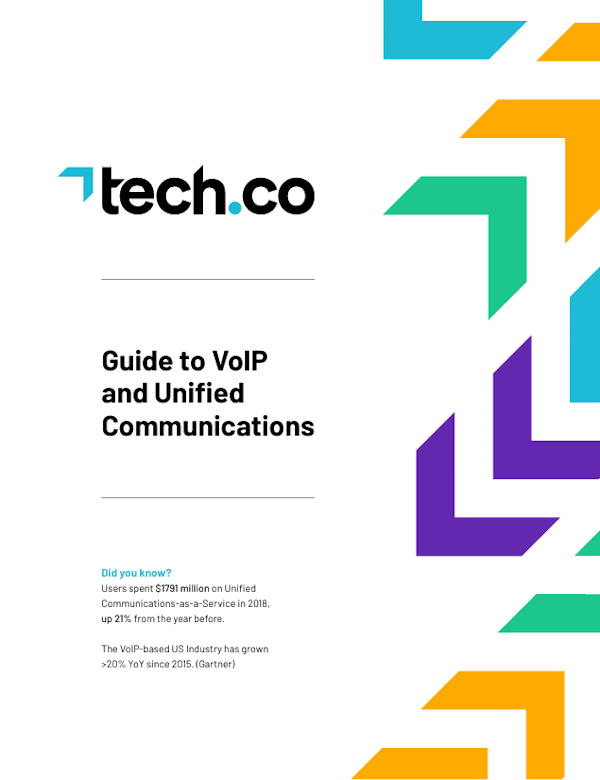
Guide to VoIP and Unified Communications
Modern business communications are rapidly shifting from traditional PBX systems to flexible, internet-based VoIP and Unified Communications solutions that improve efficiency, scalability, and cost control. VoIP enables organizations to make calls over the internet while integrating messaging, video conferencing, and collaboration tools into a single platform, enhancing productivity and customer experience. Compared to legacy systems, VoIP offers lower upfront costs, easier scalability, and greater mobility, allowing employees to work from anywhere. Businesses can choose between hosted, on-premise, or hybrid deployments depending on their needs for control, customization, and maintenance. Ultimately, adopting VoIP and Unified Communications empowers companies to streamline operations, reduce costs, and stay competitive in a modern, connected workplace.
- Hosted or on-premise options
- VoIP can start around $25/user/month
- Free download
What you'll get
A practical guide to understanding VoIP technology, comparing system types, estimating costs, and identifying the features and provider criteria that matter most.
-
VoIP, PBX, and IP-PBX explained
Understand how internet-based calling works and how VoIP compares with traditional phone systems.
-
Hosted vs. on-premise vs. hybrid
See the tradeoffs between flexibility, control, maintenance responsibility, and upfront cost.
-
Core VoIP pricing and features
Review expected per-user costs, setup considerations, conferencing, call routing, IVR, and UC capabilities.
-
How to choose the right provider
Understand how internet-based calling works and how VoIP compares with traditional phone systems.
Guide preview
VoIP & Unified Communications